
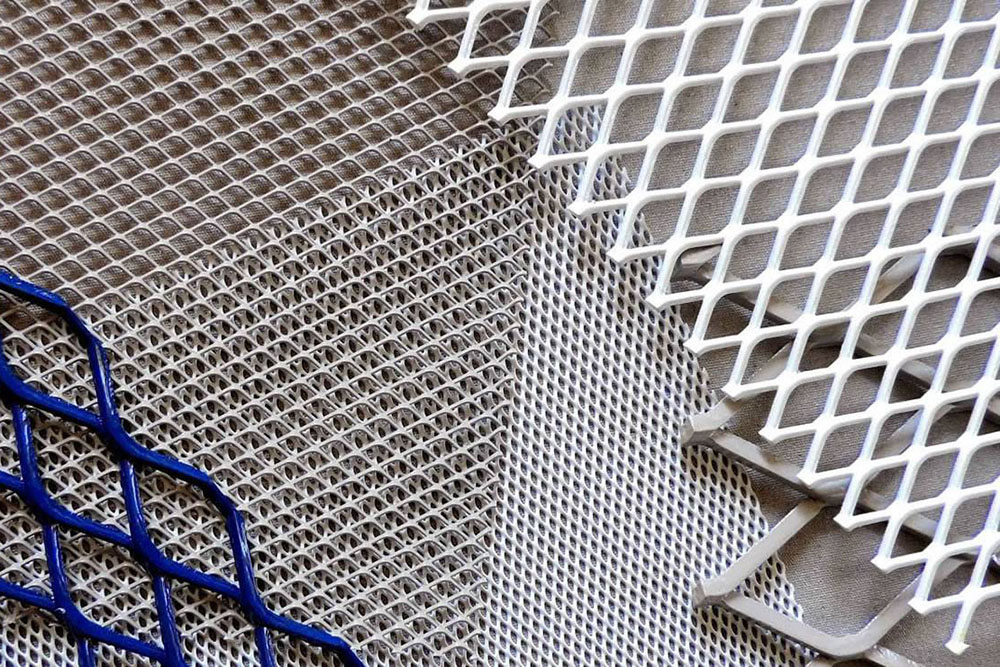
Diamond mesh steel usually refers to expanded steel sheet made by slitting and stretching a solid plate into connected diamond-shaped openings. It is not the same as chain-link fencing or woven wire mesh. For machine guards, ventilation panels, enclosures and industrial grilles, the diamond appearance alone is not enough to define the product. Buyers must distinguish raised from flattened mesh and specify SWD, LWD, opening size, strand width, original sheet thickness and finished panel dimensions. These details determine fit, openness, rigidity and quotation accuracy.
Article Summary
- Raised and flattened expanded steel have different profiles, surfaces and finished thicknesses.
- SWD and LWD are center-to-center dimensions; they are not the same as the clear opening.
- Comparable quotations require the same material, geometry, orientation, edges and panel tolerances.
Confirm That the Product Is Expanded Steel
The phrase “diamond mesh” can describe several products. Chain-link uses interlocking bent wires, while woven mesh has crossing warp and weft wires. Expanded metal begins as solid sheet that is slit and stretched so strands and bonds form a continuous pattern.
This one-piece construction has no woven intersections that can shift. Expansion creates openings without punching out every hole as scrap, although trimming and cutting can still generate waste.
Raised or Flattened: The First Choice to Make
Raised Expanded Steel
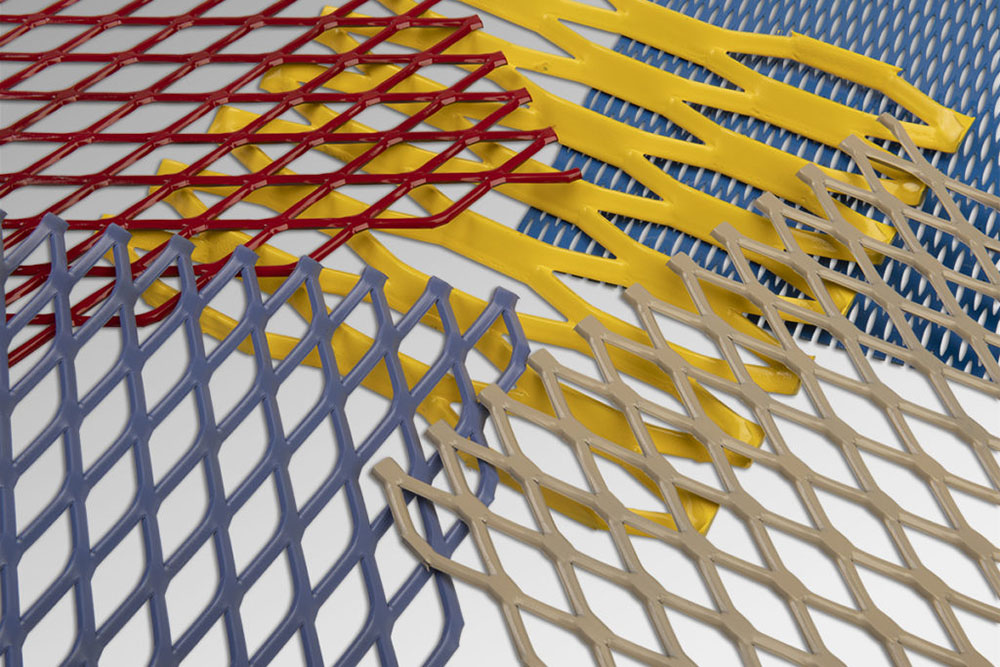
Raised expanded metal retains the three-dimensional profile created during expansion. Its angled strands produce a textured surface and an overall thickness greater than the original sheet thickness.
This profile is often selected for machine guards, enclosures and industrial screens. Consider its uneven surface and cut edges where people may touch it or the panel fits a shallow frame.
Flattened Expanded Steel
Flattened mesh passes through leveling rolls to create a smoother, lower profile. Rolling also changes diamond geometry and overall thickness.
It is often preferred for grilles and components requiring a flat mounting surface. Because flattening can alter dimensions, openness and appearance, buyers should order the required type rather than treating both forms as interchangeable.
Read the Dimensions Without Mixing Measurement Methods
Terminology varies between drawings and markets, making a diagram or approved sample valuable:
| Term | Practical meaning |
|---|---|
| SWD | Short way of design, measured between corresponding bond centers across the short direction |
| LWD | Long way of design, measured between corresponding bond centers across the long direction |
| SWO | Clear opening measured in the short direction |
| LWO | Clear opening measured in the long direction |
| Strand width | Width of the metal strip forming each side of the diamond |
| Base thickness | Thickness of the sheet before expansion |
| Overall thickness | Maximum finished profile thickness, especially relevant for raised mesh |
SWD and LWD describe pattern pitch, not unobstructed space. If one quotation uses SWD and another uses SWO, different products may appear to share the same “mesh size.” Identify every value as center-to-center or clear opening.
How the Main Specifications Affect Use
Opening and Open Area
Larger clear openings and higher open area generally allow more air, light and visibility. Smaller openings provide more screening and reduce the size of objects that can pass through.
Open area does not establish airflow for the complete assembly; pressure difference, frame obstruction and backing screens also matter. Nor is it a direct measure of strength.
Strand Width and Base Thickness
Strand width and base thickness influence weight and rigidity. Their effects must be considered with diamond size, panel dimensions, orientation and support spacing.
Comparing only SWD and LWD is a common mistake. A sheet with narrower strands or less thickness may behave differently during handling, forming or service.
Pattern Direction
Expanded metal is directional. LWD orientation can affect appearance, stiffness and fabrication. Adjacent panels with inconsistent orientation can show a visible mismatch.
Drawings should show LWD direction and the visible face, especially for repeated modules cut from larger sheets.
Select Steel According to Exposure and Finish
Carbon steel suits many indoor guards and fabricated components when the environment and finish are appropriate. Because bare steel can corrode with moisture, paint, powder coating or galvanizing may be required.
For galvanized steel, clarify whether the sheet is coated before expansion or the component is galvanized after fabrication. Cutting, welding and forming can affect coating continuity and appearance.
Stainless steel may be selected for corrosion resistance, hygiene or an uncoated finish. Its grade must match moisture, chlorides, chemicals, temperature and cleaning practices.
HIGHTOP also lists aluminum, copper and brass mesh, but these are not steel. A steel inquiry should identify carbon, galvanized or stainless steel.
Match the Mesh to the Component
For machine guards, confirm the opening, hazard distance, frame design and applicable safety requirements. Mesh alone does not establish assembly compliance.
For ventilation grilles, balance open area with screening and protection. Raised mesh has deeper texture, while flattened mesh fits slim frames more easily.
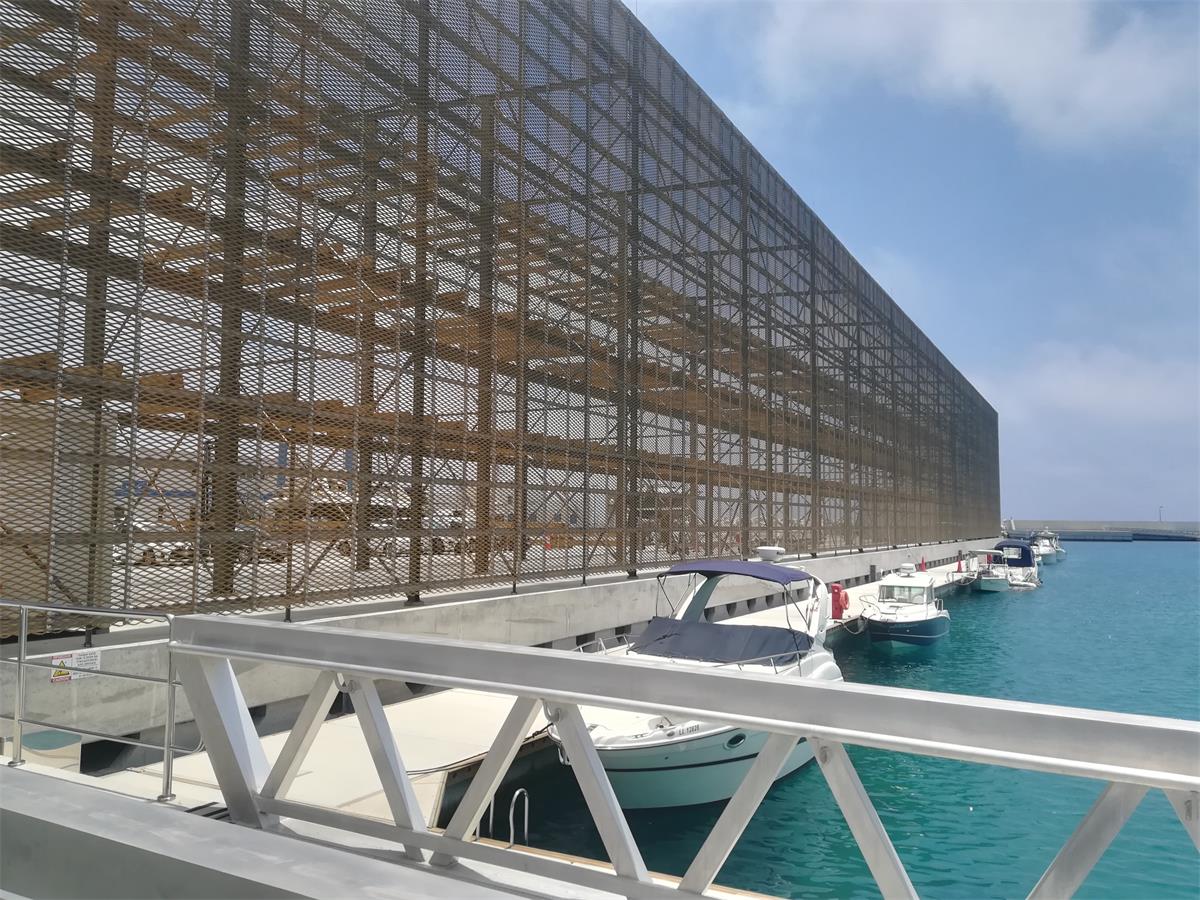
For fences and enclosures, panel size, support spacing and attachment affect stability. Cut edges may need framing or other treatment.
Flooring and walkways require purpose-selected expanded steel. Load, support span, deflection, surface profile and installation must be verified for the complete system.
Avoid These Quotation Errors
Do not request only “steel diamond mesh, standard size.” Instead, make sure every quotation uses the same:
- Steel type and grade
- Raised or flattened construction
- SWD, LWD, SWO and LWO measurement basis
- Strand width and base thickness
- Overall finished thickness where relevant
- Sheet size, quantity and LWD orientation
- Solid margins, edge condition and dimensional tolerances
- Surface treatment and post-fabrication requirements
For cut panels, state whether borders end on complete bonds or may have random open edges; this affects fit, appearance and handling.
Specifying Diamond Mesh with HIGHTOP
HIGHTOP Wire Mesh supplies metal diamond mesh sheets in raised and flattened forms. Confirmed options include stainless, carbon and galvanized steel, plus aluminum, copper and brass, subject to specification. Provide a dimensioned drawing, application, exposure, quantity and any cutting, framing or finishing requirements.
Frequently Asked Questions
Is Diamond Mesh Steel the Same as Chain-Link Mesh?
No. Expanded diamond mesh is slit and stretched from sheet metal. Chain-link mesh is assembled from bent wires that interlock with one another.
Can SWD and SWO Be Used Interchangeably?
No. SWD is a center-to-center design dimension, while SWO describes the clear opening in the short direction. Mixing them can result in the wrong pattern and open area.
Does Galvanized Expanded Steel Require Additional Finishing?
That depends on the galvanizing route, fabrication and exposure. Welds, cut edges or formed areas may require review, and appearance requirements should be agreed before production.
Get in Touch
Please Email us via the contact form below, we will get back to you ASAP.