

Article Summary
Diamond mesh is one of the most recognizable forms of expanded metal mesh, combining a distinctive diamond-shaped opening with high structural strength, good airflow, and efficient material utilization. Unlike woven wire mesh, diamond mesh is produced by slitting and stretching a metal sheet, creating a continuous structure without removing material. This makes it suitable for applications ranging from machine guards and fencing to walkways, flooring, wall cladding, grills, and architectural decoration. For buyers, the right material, surface type, opening size, and sheet configuration should be selected according to the project’s performance and design requirements.
What Is Diamond Mesh?
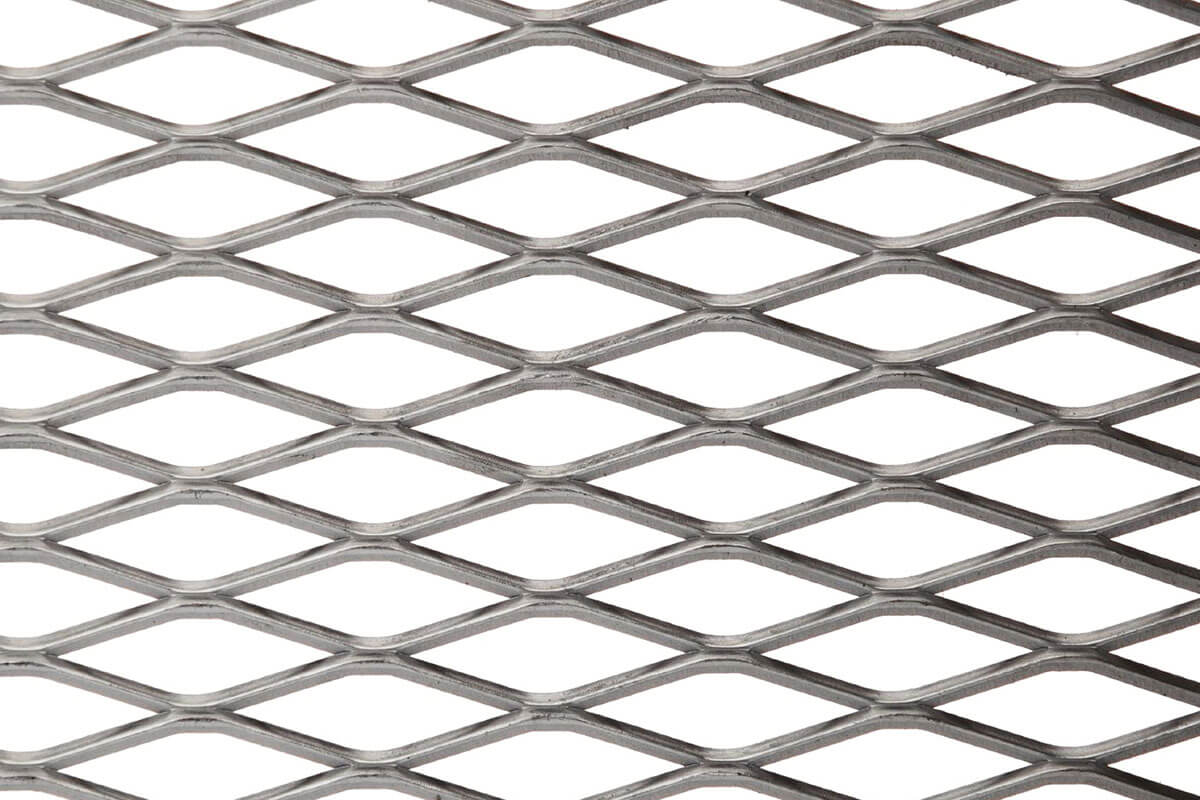
Diamond mesh, commonly called expanded metal diamond mesh, is manufactured by simultaneously cutting and stretching a metal sheet or plate.
During production, a series of controlled slits are made in the sheet. The material is then stretched, causing the cuts to open into diamond-shaped apertures.
Unlike perforated metal, where material is punched out to create individual holes, expanded metal remains a continuous piece of metal.
This manufacturing method creates two important structural elements:
- Strands — the metal strips surrounding the openings
- Bonds — the points where the strands remain connected
The strands and bonds form a continuous structure, giving diamond mesh a useful combination of strength, rigidity, and relatively low weight.
You can view HIGHTOP’s Expanded Metal Diamond Mesh Sheets for product specifications and available configurations.
Why Does Diamond Mesh Have a Diamond-Shaped Opening?
The diamond pattern is not simply an aesthetic choice.
The geometry is a direct result of the expanded metal manufacturing process and provides several functional advantages.
The angled strands distribute loads through the mesh structure, while the continuous metal construction helps maintain structural integrity.
At the same time, the open diamond pattern allows:
- Air to circulate
- Light to pass through
- Water to drain
- Heat to dissipate
- Sound to pass through
This combination makes diamond mesh particularly useful when a project requires both physical protection and controlled openness.
Diamond Mesh vs. Perforated Metal and Woven Wire Mesh
For buyers, it is important to understand that diamond mesh is different from other common metal mesh products.
Diamond Mesh vs. Perforated Metal
Perforated metal is manufactured by punching holes through a solid metal sheet.
Expanded diamond mesh is manufactured by cutting and stretching the sheet.
The expanded structure has no punched-out waste material during normal production, while perforated metal generally produces removed material during punching.
Diamond mesh is therefore often attractive when strength, weight reduction, ventilation, and material efficiency are important.
Diamond Mesh vs. Woven Wire Mesh
Woven wire mesh is manufactured by interlacing individual wires.
Diamond expanded metal, by contrast, is made from a single continuous sheet.
This gives expanded metal several structural advantages in applications where a rigid panel is preferred.
Woven mesh is often better suited to applications requiring very fine openings or precise filtration, while expanded diamond mesh is commonly selected for protection, platforms, flooring, fencing, and architectural panels.
Materials Available for Diamond Mesh
One of the major advantages of expanded diamond mesh is the wide range of materials that can be processed.
Stainless Steel Diamond Mesh
Stainless steel provides excellent corrosion and rust resistance.
It is particularly suitable for:
- Outdoor applications
- Industrial environments
- Food-related equipment
- Architectural projects
- High-humidity locations
For projects where long service life and corrosion resistance are critical, stainless steel is often the preferred option.
Carbon Steel Diamond Mesh
Carbon steel offers high strength at a competitive cost.
It is commonly used for:
- Machine guards
- Industrial platforms
- Fencing
- Walkways
- Protective barriers
When additional corrosion resistance is required, carbon steel expanded mesh can be galvanized or otherwise surface treated.
Galvanized Diamond Mesh
Galvanized steel provides a protective zinc layer that helps reduce corrosion.
It is a practical option for outdoor fencing, protective panels, platforms, and general industrial applications where cost and durability need to be balanced.
Aluminum Diamond Mesh
Aluminum is lightweight and naturally resistant to corrosion.
It is particularly useful for architectural applications where reducing panel weight is important.
Typical uses include:
- Building façades
- Decorative screens
- Ceiling panels
- Wall cladding
- Lightweight guards
Brass and Copper Diamond Mesh
Brass and copper are often selected for decorative or specialty applications.
Their distinctive metallic appearance can add architectural value to:
- Interior partitions
- Decorative panels
- Furniture
- Feature walls
- Custom architectural elements
Raised Diamond Mesh vs. Flattened Diamond Mesh
Expanded metal diamond mesh is generally available in two basic configurations: raised and flattened.
Raised Diamond Mesh
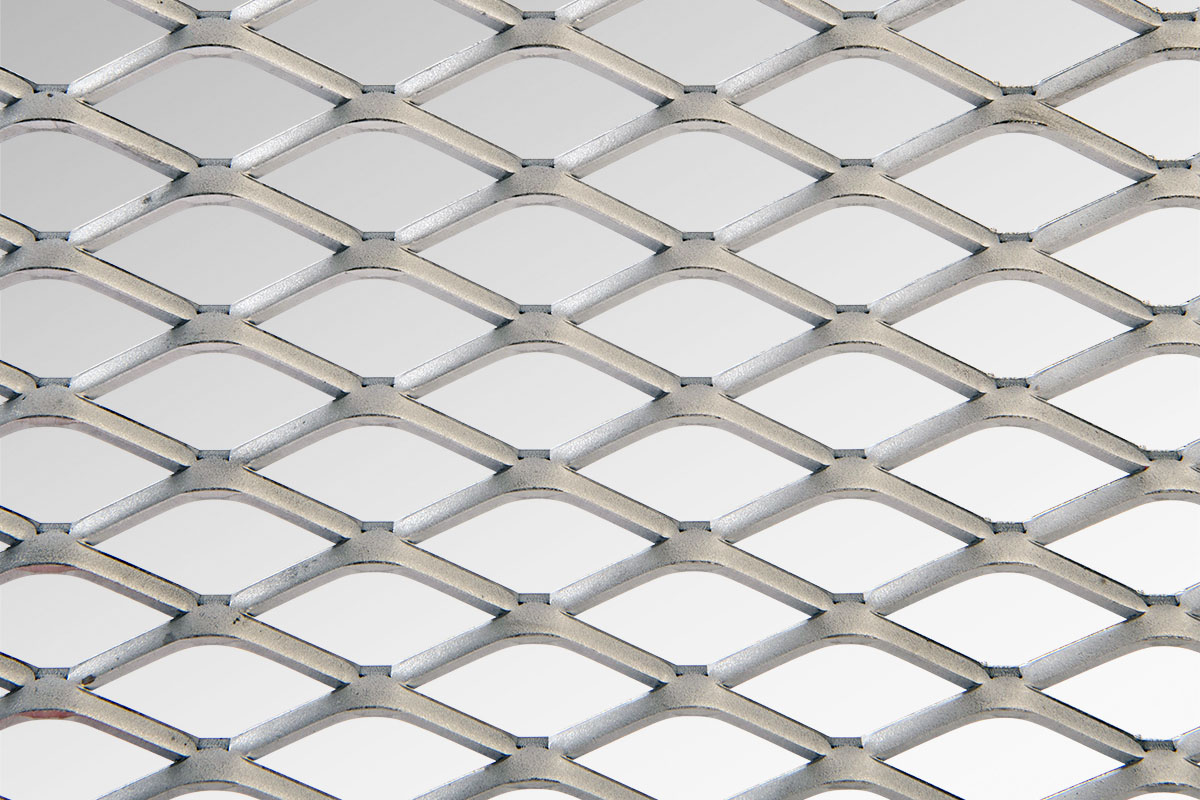
Raised expanded metal retains the original three-dimensional structure created during stretching.
The strands are positioned at an angle relative to the sheet surface.
This configuration provides:
- Better rigidity
- Increased structural depth
- Strong grip
- Improved slip resistance
Raised diamond mesh is particularly useful for walkways, flooring, platforms, machine guards, and industrial applications.
Flattened Diamond Mesh
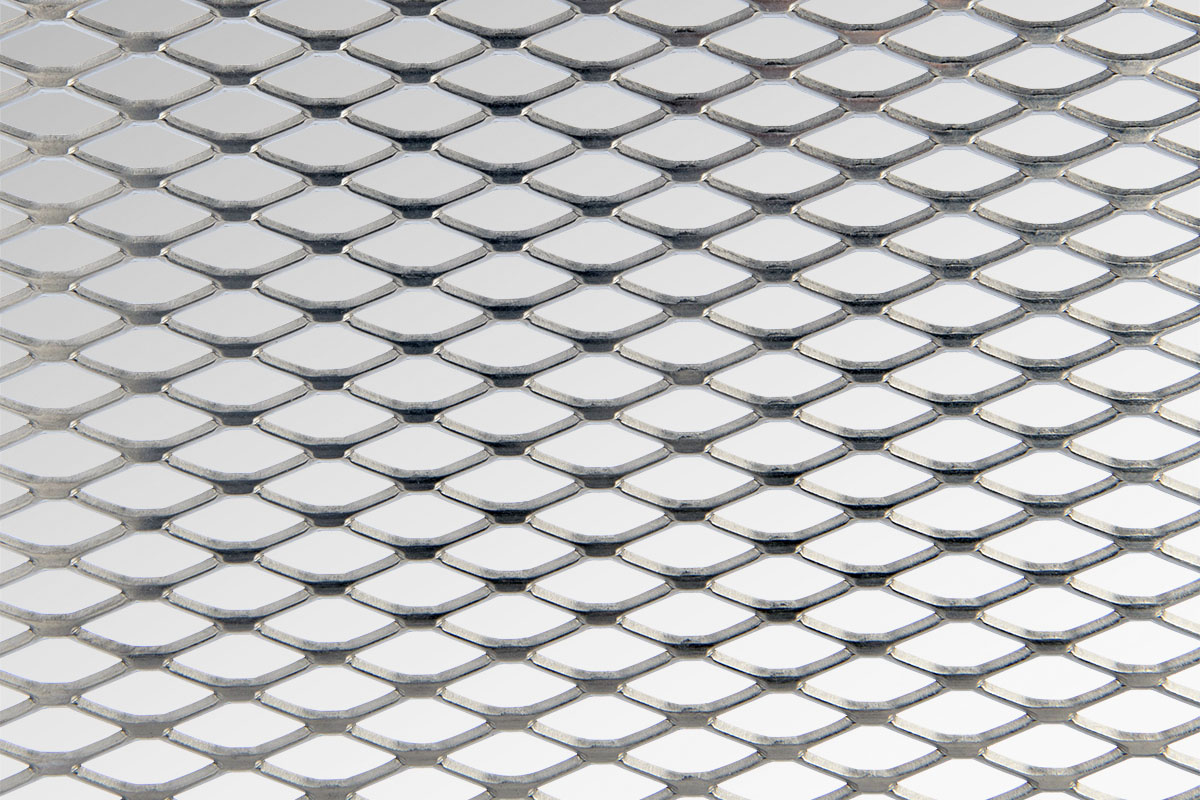
Flattened expanded metal is processed through a flattening operation after expansion.
This produces a more level surface and a thinner overall profile.
Flattened diamond mesh is commonly selected for:
- Architectural panels
- Decorative screens
- Fencing
- Wall cladding
- Equipment covers
- Interior applications
The smoother surface also makes it easier to install against flat supporting structures.
Key Advantages of Diamond Mesh
High Strength-to-Weight Ratio
The continuous expanded structure provides considerable strength without requiring a completely solid sheet.
This can help reduce material weight while maintaining useful structural performance.
Efficient Material Utilization
Because the sheet is cut and stretched rather than having sections punched completely out, the normal expanded metal process does not generate the same type of scrap as conventional punching.
More of the original material becomes part of the finished mesh.
This can contribute to efficient raw-material utilization.
Excellent Air and Light Circulation
The open diamond pattern allows air and light to move freely through the panel.
This makes diamond mesh useful for ventilation covers, equipment guards, façades, fencing, and architectural screens.
Versatile Design
Different materials, strand dimensions, opening sizes, and surface configurations can produce significantly different visual and functional characteristics.
This allows designers and engineers to select diamond mesh for both technical and aesthetic purposes.
Applications of Diamond Mesh
The combination of strength, open area, drainage, and visual appeal allows diamond mesh to serve both industrial and architectural purposes.
Machine Guards and Protective Panels
Expanded diamond mesh can be used as a protective barrier around machinery, motors, fans, and other equipment.
The rigid structure helps prevent accidental contact with moving components while the openings allow ventilation and visibility.
For equipment guards, the opening size should be selected according to the safety requirements of the application rather than appearance alone.
Fencing and Security Barriers
Diamond mesh is widely used for fences, partitions, and protective barriers.
Compared with a solid metal panel, the open structure reduces wind resistance while maintaining a physical barrier. Galvanized steel and stainless steel are particularly suitable for outdoor applications.
Walkways, Platforms, and Flooring
Raised diamond mesh provides a textured surface with good traction.
The openings allow rainwater, oil, snow, and other liquids to pass through instead of accumulating on the walking surface.
For this reason, expanded metal is commonly used for:
- Industrial walkways
- Platforms
- Stair treads
- Ramps
- Catwalks
- Maintenance platforms
For load-bearing applications, buyers should provide the required span, load, support spacing, and environmental conditions so the appropriate specification can be selected.
Wall Cladding and Architectural Screens
Architects often use diamond mesh as a façade, wall cladding, privacy screen, or decorative partition.
Its changing appearance under different lighting conditions can create a distinctive architectural effect while retaining airflow and partial visibility.
Grills and Equipment Covers
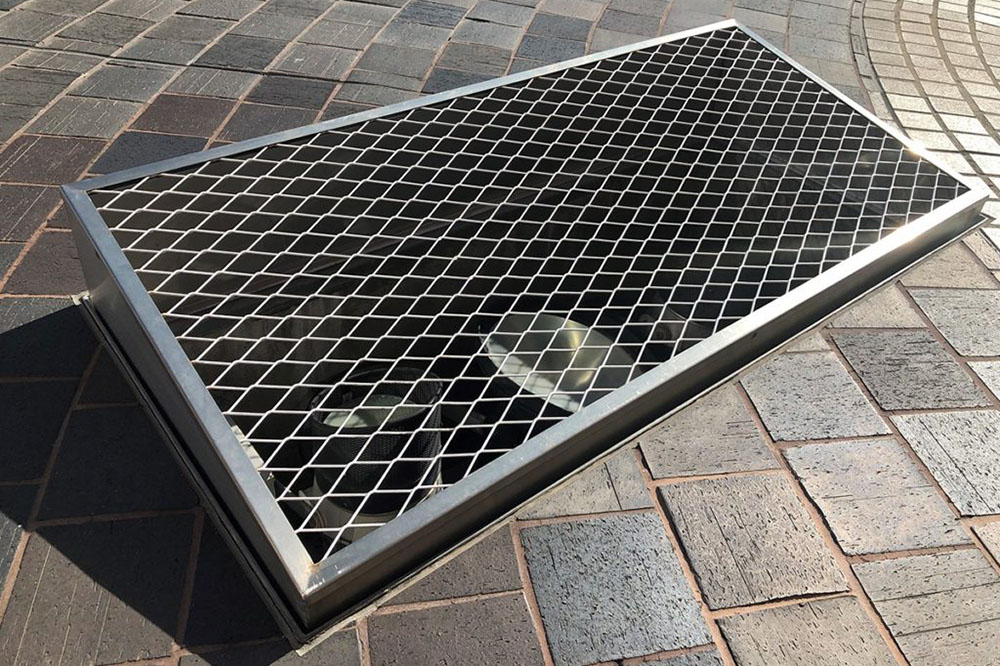
Diamond mesh can also be fabricated into ventilation grills, speaker covers, automotive components, and protective covers.
Its open structure allows air to pass through while providing a physical barrier around the protected component.
How to Choose the Right Diamond Mesh
Selecting expanded diamond mesh for a project involves more than choosing the opening shape. Several specifications should be evaluated together.
Opening Size
The diamond opening affects airflow, visibility, weight, and protection.
Smaller openings generally provide greater coverage and protection, while larger openings provide more open area and lower weight.
Material Thickness
The thickness of the original metal sheet influences the strength and weight of the finished product.
Heavy-duty walkways and industrial guards normally require a more robust specification than decorative wall panels.
Strand Width
Strand width affects both structural performance and appearance.
A wider strand can provide greater rigidity and a stronger visual pattern, while narrower strands create a lighter appearance and greater visual openness.
Raised or Flattened Surface
Choose raised diamond mesh when traction, rigidity, or three-dimensional structure is important.
Choose flattened diamond mesh when a relatively flat surface is required for architectural panels, fencing, or fabrication.
Why Buy Diamond Mesh from HIGHTOP?
For B2B buyers, choosing the manufacturer is just as important as selecting the specification.
HIGHTOP supplies expanded metal mesh for industrial, architectural, and commercial applications and can support projects requiring different materials and configurations.
The available material options include:
- Stainless steel
- Carbon steel
- Galvanized steel
- Aluminum
- Copper
- Brass
HIGHTOP can also provide both raised and flattened expanded diamond mesh, allowing customers to select the structure according to the intended application.
Custom Diamond Mesh for Different Projects
Standard products are suitable for many applications, but engineering projects often require specific dimensions.
HIGHTOP can discuss customized requirements such as:
- Sheet dimensions
- Material
- Thickness
- Opening size
- Strand width
- Surface configuration
- Surface treatment
- Cutting and fabrication
For a B2B quotation, it is helpful to provide the application, material preference, required dimensions, estimated quantity, and any drawings or technical specifications.
This information allows the manufacturer to recommend a more appropriate configuration rather than simply supplying a generic mesh.
Frequently Asked Questions
What is diamond mesh?
Diamond mesh is a type of expanded metal made by cutting and stretching a metal sheet to form diamond-shaped openings. The finished product is a continuous metal structure rather than individually woven wires.
Is diamond mesh the same as expanded metal?
In most commercial applications, diamond mesh refers to expanded metal with diamond-shaped openings. Expanded metal can also be produced with other opening patterns, but the diamond pattern is the most common.
Is diamond mesh strong?
Yes. Its continuous structure and angled strands provide good strength and rigidity relative to its weight. The actual load-bearing capacity depends on material, thickness, strand dimensions, opening size, and support conditions.
What materials can diamond mesh be made from?
Common materials include stainless steel, carbon steel, galvanized steel, aluminum, copper, and brass. The best material depends on corrosion resistance, strength, weight, appearance, and budget requirements.
What is the difference between raised and flattened diamond mesh?
Raised mesh retains its three-dimensional expanded structure and generally provides better grip and rigidity. Flattened mesh is processed after expansion to create a flatter surface and is often preferred for architectural and fabrication applications.
Can diamond mesh be used for flooring?
Yes. Raised expanded diamond mesh is commonly used for walkways, platforms, ramps, stair treads, and industrial flooring because its open structure provides drainage and its raised strands provide traction.
Is diamond mesh suitable for outdoor applications?
Yes, provided the material and surface treatment are appropriate for the environment. Stainless steel and galvanized steel are common choices for outdoor applications where corrosion resistance is important.
Can diamond mesh be customized?
Yes. Depending on the manufacturing requirements, specifications such as material, thickness, opening size, strand dimensions, sheet size, and surface configuration can be customized.
How do I choose the right diamond mesh for a project?
Start with the application’s functional requirements: load, span, required protection, open area, corrosion exposure, and installation method. Then select the material, thickness, opening size, and raised or flattened configuration accordingly.
Diamond mesh combines strength, open area, material efficiency, and versatile design, making it suitable for industrial protection, walkways, fencing, architectural screens, cladding, and decorative applications. Contact HIGHTOP with your application and specifications to get a suitable diamond mesh solution for your project.
Get in Touch
Please Email us via the contact form below, we will get back to you ASAP.